

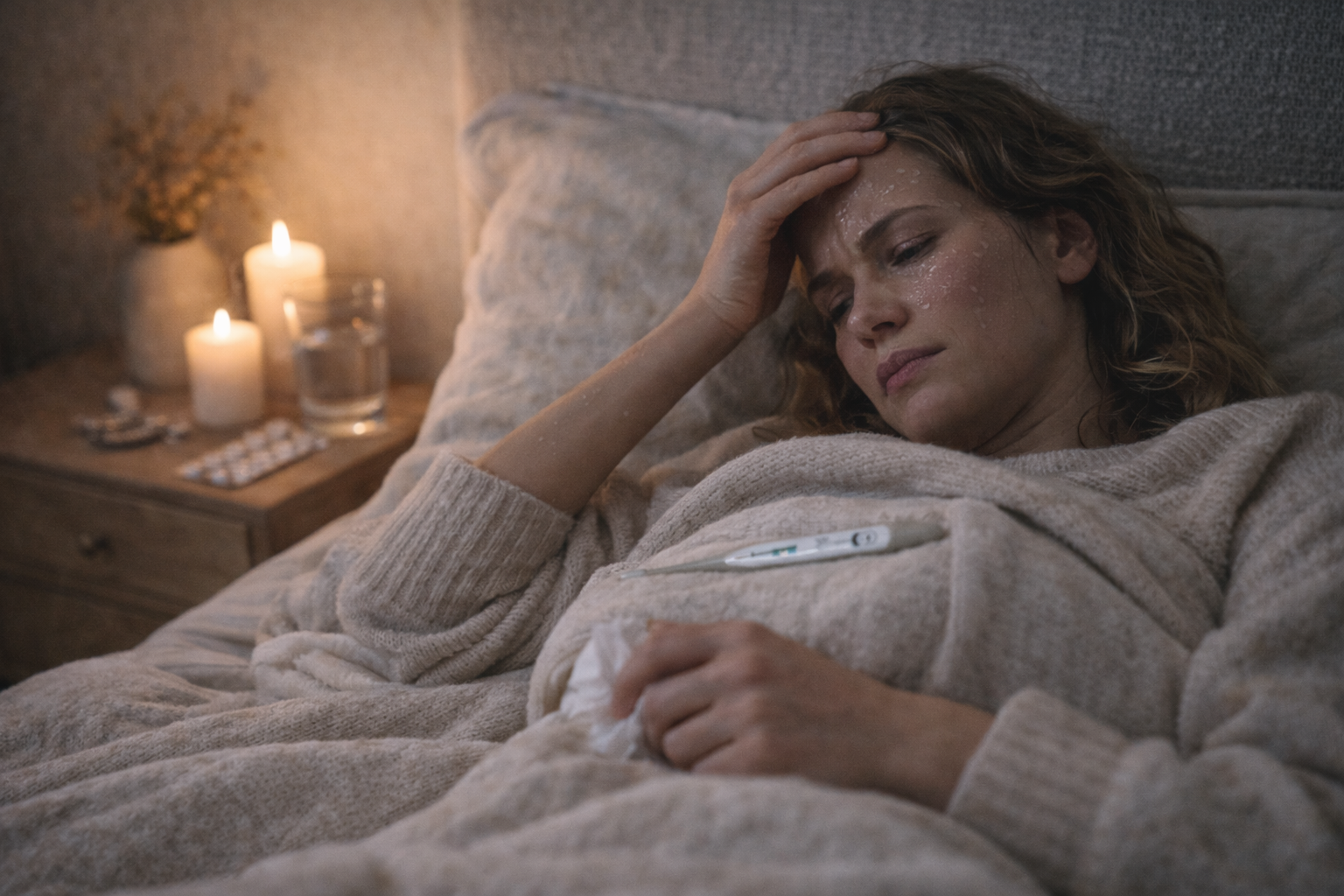
Fever and Night Sweats: Why Wool is Better Than Cotton (and Fleece) When You Are Sick
It is the classic "Sweat-Shiver" Cycle that makes nights of illness a nightmare. But did you know that the blame for this discomfort isn't just on the virus, but often on the material you sleep in? Let's discover why abandoning cotton and synthetics in favor of Pure Wool can help you manage fevers better and truly rest.
1. The False Myth of Cotton and Fleece
When we are sick, instinct leads us to choose materials we consider "safe." Usually, the options are two, and both have a fatal flaw when heavy sweating is involved:
-
Cotton: It is a natural fiber, sure, but it behaves like a sponge. It absorbs sweat but holds onto it. Once wet, cotton loses all insulating capacity and cools down rapidly.
-
Result: You find yourself sleeping wrapped in a "cold compress" that sharply lowers body temperature, causing new shivers.
-
-
Fleece (Synthetic): It is warm, but not breathable. It creates a "Greenhouse Effect." Heat doesn't escape, sweat doesn't evaporate and stays on the skin.
-
Result: Excessive overheating that disturbs sleep and prevents the body from thermoregulating naturally.
-
2. Wool: The "Natural Nurse" of Your Bed
Valle di Lana wool acts completely differently. It is the only fiber that actively works with your body during the thermal swings of a fever.
Here is why it is the best support for healing:
-
Moisture Management: Wool is hygroscopic. It can absorb up to 35% of its weight in water vapor without ever feeling wet to the touch. If you sweat during the night, wool "drinks" the moisture and transfers it outwards, leaving your skin and pajamas dry.
-
Constant Insulation: Unlike wet cotton, wool continues to keep you warm even if it has absorbed moisture. This means that, after the "sweat," you won't suffer the thermal shock of the cold. The bed's microclimate remains stable, allowing you to continue sleeping without waking up to change.
3. Why It Is Crucial for Children and the Elderly
Temperature management is critical, especially for little ones and the elderly, who have a less efficient thermoregulation system.
A child with a high fever tends to sweat a lot. If they sleep on a synthetic mattress pad or with a polyester pillow, their head and back will stay wet all night, promoting chills and coughing. Using a
4. The "Comfort Protocol" for When You Are Sick
If you or a loved one are not feeling well these days, here is how to prepare the perfect "Healing Bed":
-
Breathable Base: Use a
Wool Topper on top of the mattress. This is fundamental because sweat travels downwards. The topper captures it before it reaches the mattress and creates a soft barrier that relieves the muscle aches typical of the flu. -
Layered Coverage: Instead of a heavy synthetic duvet that boils you, use a
Wool Duvet . Thanks to its breathability, it prevents the "sauna effect," keeping you warm but allowing the body to "breathe out" excess feverish heat. -
Morning Airing: Wool is self-cleaning and antibacterial. Upon waking, simply expose blankets and pillows to fresh air for a few minutes. The fibers will release the moisture accumulated during the night and regenerate, ready to welcome you again in the evening.
Conclusion: Heal Through Resting
When the body fights a virus, it asks for only two things: Rest and Stability. Don't force it to fight against a cold and damp bed too.
Choosing wool means relying on a material that protects you, welcomes you, and keeps you in the ideal condition to recover your strength. It is a form of care that lasts all night long.
Face winter with the right protection.