
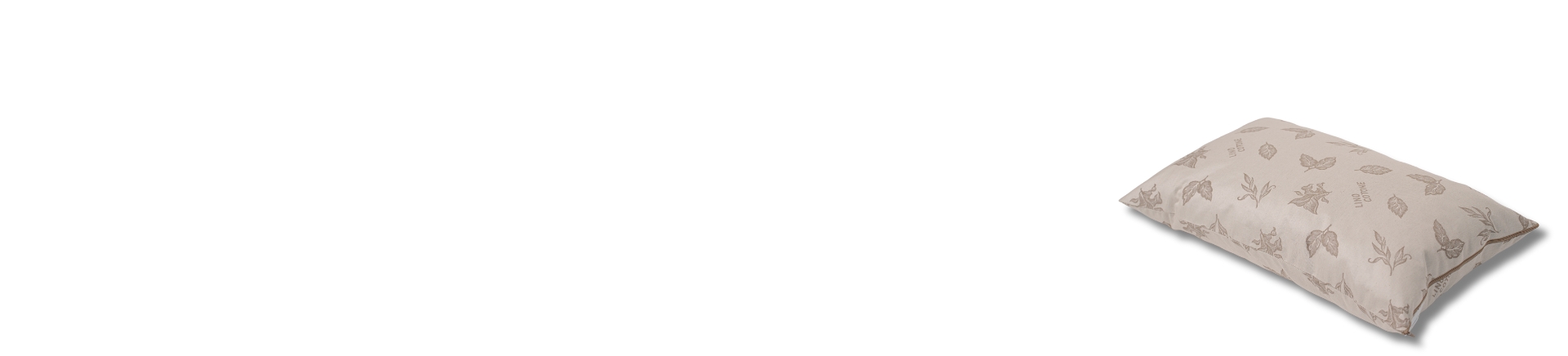

Wool in Summer: Why It Helps You Sleep Cool Even in the Heat
The first summer I slept on a wool pillow, I was convinced I had made a mistake. It was June in Pratola Peligna, and the nights were already heavy. I went to bed bracing myself to toss and turn all night, as usually happens when the heat gets trapped in the mattress and refuses to leave.
The next morning, I woke up dry, rested, and with a question that has guided my entire journey ever since: why doesn't anyone know this?
If you are wondering whether using wool in summer is pure madness, I understand you. Wool is the victim of a massive misunderstanding—the biggest misunderstanding in the textile world. You say "wool," and people immediately think of a thick Christmas sweater, their grandmother's heavy blanket, and intense heat. But wool is not a "hot" material. Wool is a smart material. And the difference between the two is the difference between sleeping poorly and sleeping beautifully, even in July.
How Wool Fiber Truly Works
To understand why wool works for summer sleep, you have to look closely. Not with your eyes, but with a microscope.
Every single wool fiber is covered in a scaly surface, similar to the tiles on a roof. This structure is no accident: it evolved over thousands of years to protect sheep from the freezing cold of mountain nights and the blazing heat of the midday sun. Sheep don't have a seasonal wardrobe; they don't change their coats from winter to summer. Yet, they survive extreme temperature fluctuations that would destroy any synthetic fabric.
The secret is wool's hygroscopic capacity: every fiber can absorb up to 35% (over 1/3) of its own weight in moisture without ever feeling wet to the touch. For a sleeper, this means one concrete thing: when your body releases sweat during the night—and it always does, even when we don't notice it—the breathable wool absorbs it, moves it away from your skin, and releases it into the environment as vapor.
The result? The surface you sleep on stays perfectly dry. And a dry body perceives much less heat.
Wool vs. Synthetics in Summer: The Real Difference
Here is where the comparison becomes ruthless.
A polyurethane foam or memory foam mattress functions like a thermal sponge: it absorbs your body heat and traps it. At night, the temperature on the surface of the mattress can rise by 2-3 degrees compared to the room temperature. If you frequently sweat on a memory foam mattress, you know what I mean: your body reacts by sweating more, the sweat gets trapped in the non-breathable synthetic material, and a vicious cycle begins. More heat → more sweat → more humidity → more heat.
This is what experts call thermal accumulation, and it is one of the most common causes of summer awakenings.
Wool does the exact opposite. It doesn't accumulate heat—it manages it. It absorbs it when there is an excess and releases it when the temperature drops. We call it a "living fiber" for exactly this reason: it reacts to the environment rather than submitting to it. It is the closest thing to a natural air conditioning system that exists in textiles.
The Sleep Microclimate: Why It Matters More Than the AC
There is a detail that escapes those who try to fight nighttime heat using only the air conditioner: the problem isn't the temperature of the room, but the temperature in the space between your body and the mattress. That space—just a few inches—is your Sleep Microclimate. And that is where the quality of your rest is decided.
You can set your bedroom to 20°C, but if your mattress traps heat and humidity, your microclimate will still be completely unbalanced. Conversely, with a wool sleep system and good air circulation, sleeping well in the heat becomes the norm, even with the window open and no air conditioning.
What the Science Says: It’s not just a feeling. Research on thermal comfort (such as the famous studies conducted by the University of Sydney) has proven that sleeping on wool fibers allows you to fall asleep faster and significantly increases the time spent in the deep sleep phase compared to cotton or synthetics, precisely because of wool's exceptional thermoregulation.
Merino Wool: Not All Wools Are Created Equal
An important point: when we talk about wool, we aren't talking about the itchy sweater wool.
Merino wool has much thinner fibers than traditional wool—under 20 microns. This makes it soft to the touch, lightweight, and even more efficient at thermoregulating because the finer fibers create more micro-air pockets. These pockets act as a natural two-way insulator: keeping the heat out in summer and in during winter.
For our products, we use English Refino and Merino wool sourced from certified mulesing-free farms—a practice we care deeply about, ensuring animal welfare. The choice of raw material is not a minor technical detail. It is the difference between a product that actually works and one that just carries a "wool" label but behaves like plastic.
How to Sleep Well with Wool in Summer: Practical Tips
You don't need to revolutionize your bed overnight. Even small changes make a difference you can feel immediately. Here is how to manage your sleep allies:
1. If You Already Have a Wool Mattress
In summer, use a light cotton or linen bedsheet. Strictly avoid synthetic or waterproof mattress protectors: they block breathability and cancel out the thermal advantage. Air out the mattress at least once a month by lifting it off the bed base for half an hour.
2. The Wool Topper Trick
If you don't want to change your current mattress, a
3. Choosing the Right Pillow
A
Frequently Asked Questions About Wool in Summer
Does a wool mattress make you hot? No, a wool mattress does not make you hot. It is an isothermal and breathable material. It absorbs body moisture and acts as an insulator against external temperatures, keeping the surface dry and cool even during the muggiest summer nights. It is often much cooler than modern memory foam or gel.
Doesn't wool make you sweat more? On the contrary: wool reduces sweating. Synthetic fibers trap sweat, while wool is highly hygroscopic. It absorbs body vapor before it becomes liquid sweat and releases it into the air, leaving your skin perfectly dry.
Do I need a different duvet in summer? A wool duvet works wonderfully even in July. Its thermoregulation ensures your body doesn't overheat. Alternatively, on the most torrid nights, a simple linen or cotton sheet is enough.
Doesn't wool smell when it gets hot? No. The keratin in the wool fiber naturally binds to dangerous substances, permanently trapping toxins and bad odors. Bacteria responsible for bad smells (which proliferate in sweat) struggle to survive on wool, unlike on synthetic fabrics. A properly aired wool product remains odorless.
A Change in Perspective
When we started Valle di Lana, the most frequent question we received was: "But won't I die of heat in the summer?" Today, we still get that question, especially in May when the first real heat arrives—and that is exactly why I wrote this article.
The answer, after years spent studying and testing this fiber on my own skin, is always the same: wool is not a material for one season. It is a material for every night of the year.
If you want to understand how it feels on your skin, the best way is to try it. Start wherever you prefer—a pillow, a topper, a duvet—and let your body give you the answer.
✍️ The Author: Giovanni Founder of Valle di Lana. He selects and hand-crafts the best virgin wools in his workshop in Abruzzo, Italy. His mission is to give people back the right to a truly natural sleep, proving that craftsmanship and ergonomics always beat plastic and chemistry.